
Know The Warning Signs
Common Causes of Roof Leaks in Saint Louis County
Roof leaks often begin at transitions instead of the middle of an open roof field. Aging shingles, loosened flashing, worn sealant, backed-up drainage, and damage around valleys, vents, skylights, chimneys, and roof edges can all create a path for water. Wind, hail, heavy rain, and repeated freeze-thaw cycles can make those weak points show up faster across Saint Louis County.
The stain or drip inside may not sit directly below the entry point. Water can travel along decking, framing, or insulation before it becomes visible. That is why a documented inspection looks at the roof system and the interior clues together instead of guessing from one spot.
Explore roof repair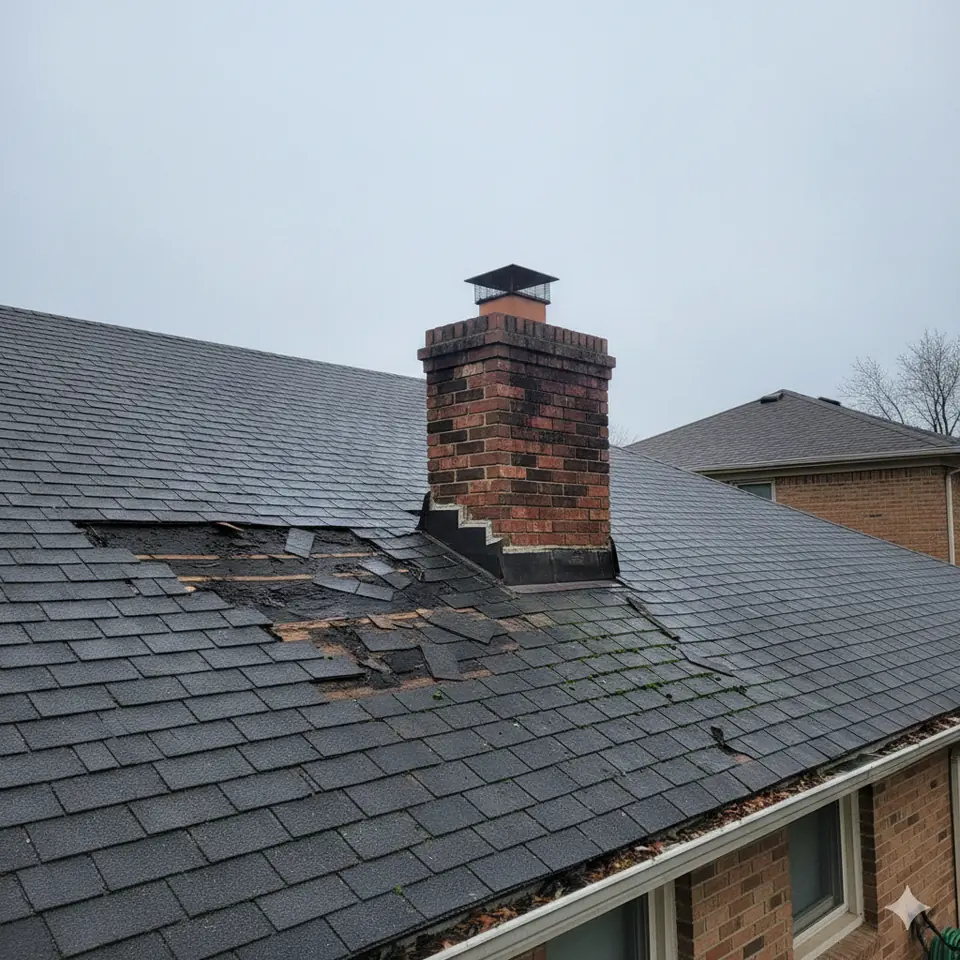
Residential & Commercial
Roof Leak Repair Services for Residential and Commercial Properties
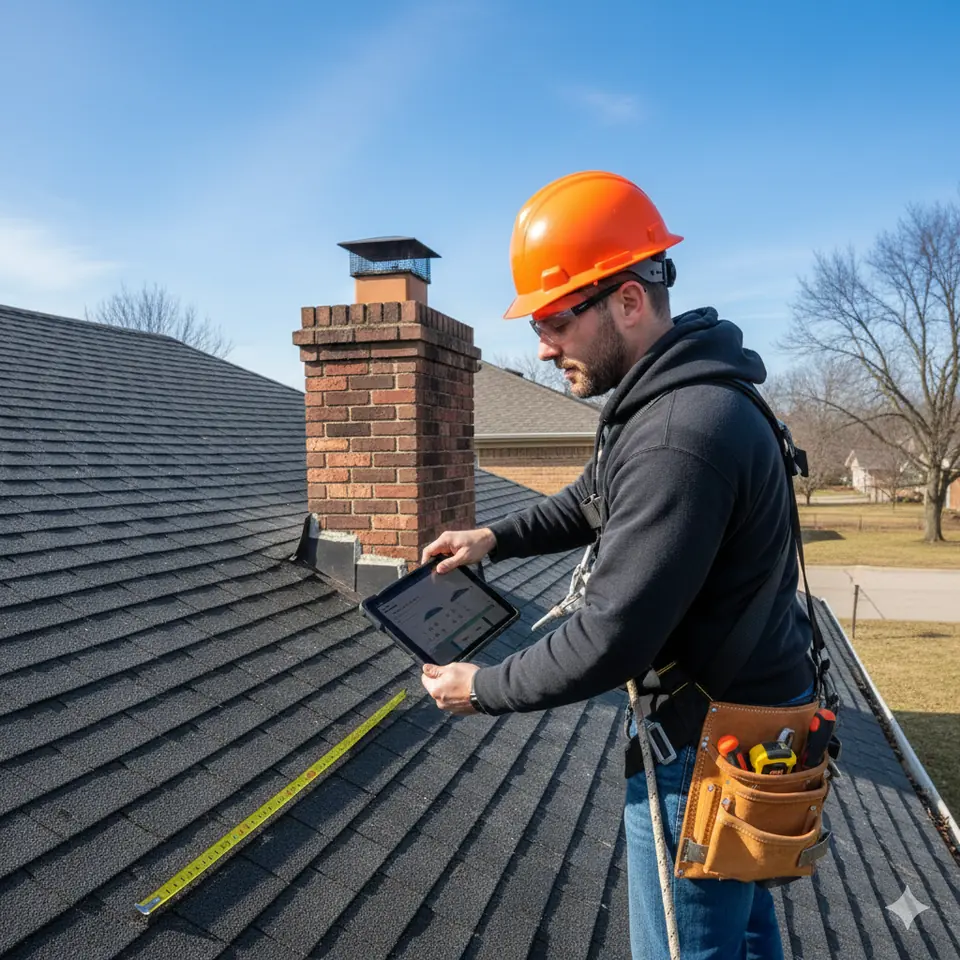
A responsible repair begins with locating the source and understanding why it opened up. On sloped residential roofs, the solution may involve shingles, flashing, underlayment, ventilation details, or a transition around a chimney or wall. Flat and low-slope roofs can require a different review of seams, penetrations, drainage, and membrane condition.
The right repair is not simply the fastest place to apply sealant. It is the approach that addresses the active water entry and the surrounding detail so the same issue is less likely to return after the next weather event.
Explore commercial roofingProtect The Interior
When a Roof Leak Needs Prompt Attention
Active water entering the building, a growing ceiling stain, wet insulation, damaged drywall, or water near electrical fixtures all deserve prompt attention. Move valuables out of the affected area if you can do so safely, use containers to manage drips, and contact a qualified roofing professional for next steps.
Do not climb onto a roof during rain, wind, lightning, or icy conditions. A temporary tarp can help protect a roof only when it is installed safely by someone qualified to work at height. The priority is protecting people first, then limiting additional water exposure until the roof can be assessed.
Request a roof inspection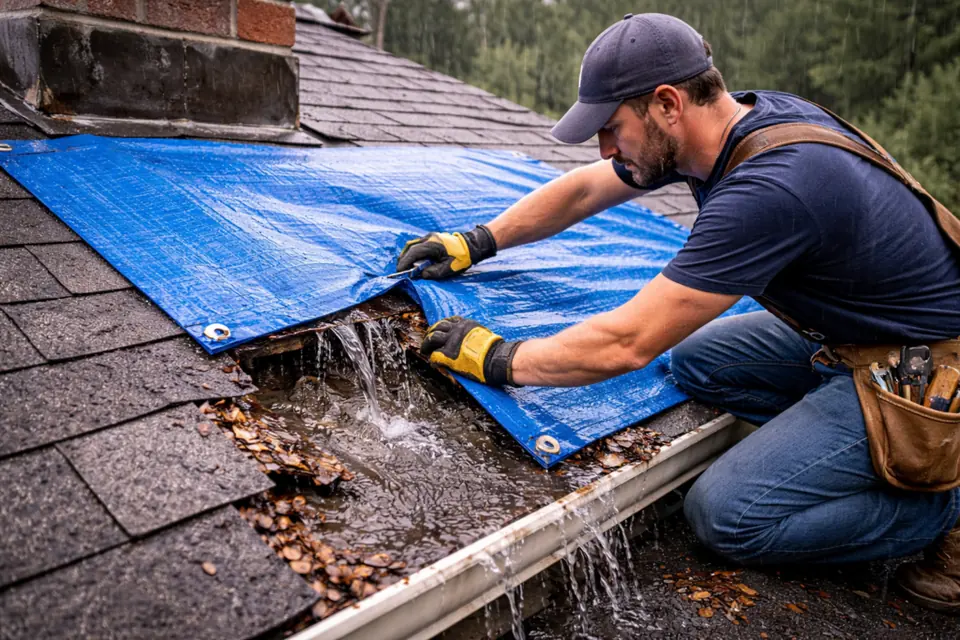
Until Help Arrives
Safe Temporary Steps Until a Professional Can Inspect the Roof
Start from inside the building, not from the roof. Take a few photos of the visible stain or drip if it is safe to do so, place a container below active water, and move furnishings or electronics away from the area. If a ceiling is sagging, water is near electrical equipment, or you are unsure whether the area is safe, leave the area and seek qualified help.
Keep the roof surface clear of foot traffic until it can be evaluated. A professional inspection can document the condition, identify the entry path, and explain whether a targeted repair or a broader roof-system solution makes sense for the property.